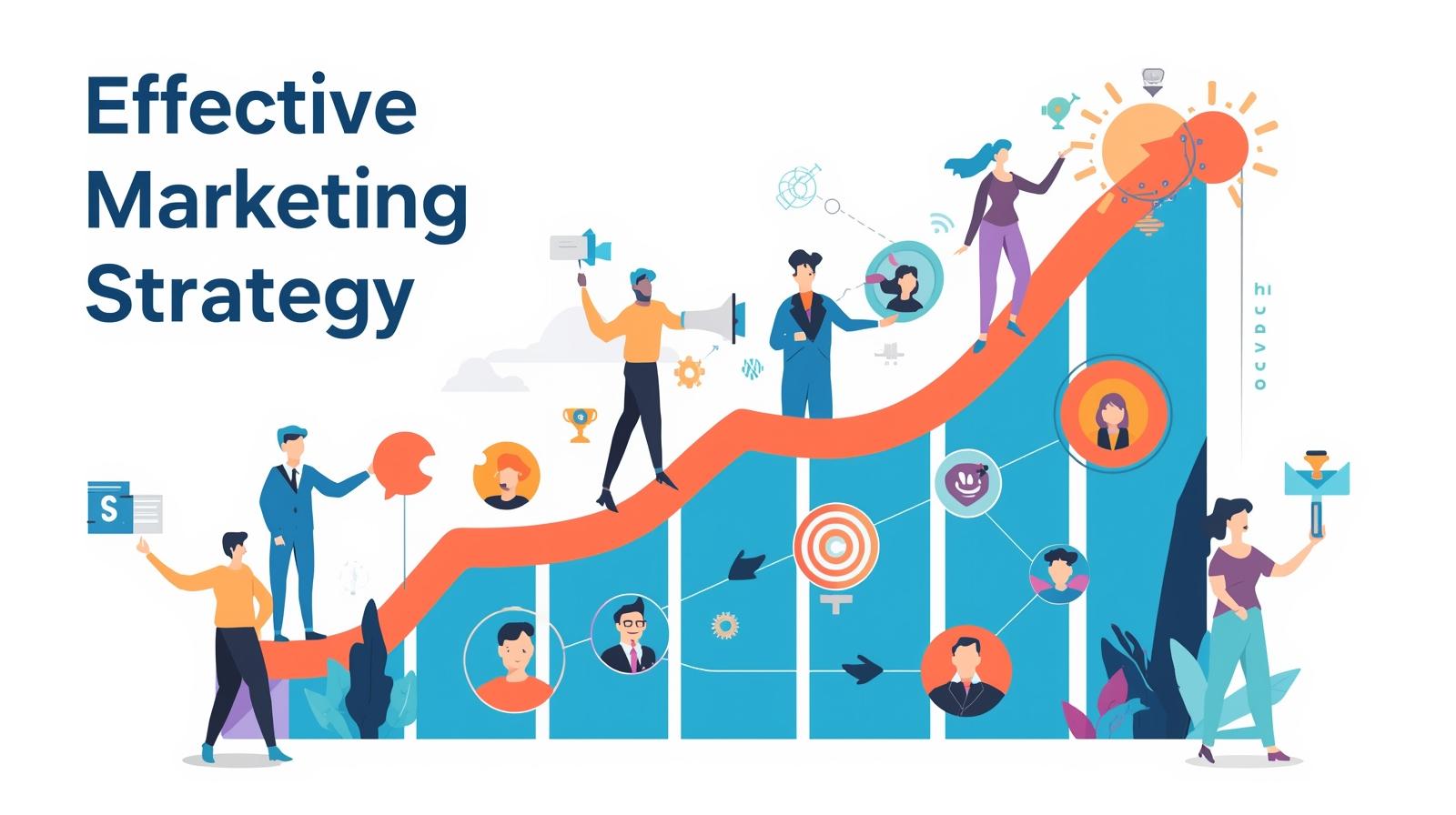

How to Create an Effective Marketing Strategy: A Comprehensive Guide for Business Success
Introduction to Building an Effective Marketing Strategy
Creating an effective marketing strategy is essential for any business that wants to thrive in today’s competitive marketplace. Moreover, a well-planned strategy helps you reach the right customers with the right message at the right time. Furthermore, an effective marketing strategy serves as your roadmap to business growth and customer engagement. Additionally, it aligns your marketing efforts with your business goals while maximizing your return on investment.
Subsequently, businesses without a clear marketing plan often waste resources on random tactics that don’t deliver results. However, when you develop an effective marketing strategy, every marketing dollar works harder for your business. Therefore, this comprehensive guide will walk you through the essential steps to create a strategy that drives real business results. Consequently, you’ll learn how to build a framework that adapts to changing market conditions while keeping your business competitive.
Understanding the Foundation of an Effective Marketing Strategy
What Makes a Marketing Strategy Truly Effective?
First and foremost, an effective marketing strategy starts with clear, measurable goals that align with your business objectives. Generally, these goals should be specific, achievable, and time-bound to ensure accountability. Furthermore, successful strategies focus on understanding customer needs rather than just promoting products. Additionally, they incorporate multiple channels and tactics that work together seamlessly.
Moreover, flexibility remains crucial because market conditions change constantly. Subsequently, your strategy must adapt to new trends, technologies, and customer behaviors. Meanwhile, consistency in messaging and branding across all channels strengthens your market position. Therefore, balancing adaptability with consistency creates a robust marketing framework.
Core Components Every Strategy Needs
Essentially, every effective marketing strategy contains several fundamental elements that work together. Primarily, market research provides the insights needed to make informed decisions. Furthermore, clear target audience definition ensures your messages reach the right people. Additionally, competitive analysis helps you identify opportunities and differentiate your offerings.
Moreover, your unique value proposition sets you apart from competitors in meaningful ways. Subsequently, channel selection determines where and how you’ll reach your audience. Meanwhile, budget allocation ensures resources support your most important initiatives. Consequently, these components form the backbone of successful marketing efforts.
Developing Your Effective Marketing Strategy Framework
Conducting Comprehensive Market Research
Initially, thorough market research forms the foundation of any effective marketing strategy. Specifically, you need to understand industry trends, customer preferences, and market dynamics. Furthermore, primary research through surveys and interviews provides direct customer insights. Additionally, secondary research from industry reports and studies offers broader market context.
Moreover, analyzing customer data reveals patterns in buying behavior and preferences. Subsequently, this information helps you identify unmet needs and market gaps. Meanwhile, tracking competitor activities shows what works and what doesn’t in your industry. Therefore, comprehensive research prevents costly mistakes and identifies promising opportunities.
Defining Your Target Audience Precisely
Remarkably, precise audience definition dramatically improves the effectiveness of your marketing strategy. Generally, successful businesses create detailed buyer personas representing their ideal customers. Furthermore, these personas include demographic information, psychographic characteristics, and behavioral patterns. Additionally, understanding customer pain points helps you craft compelling messages.
Moreover, segmenting your audience allows for more personalized marketing approaches. Subsequently, you can tailor messages and offers to specific customer groups. Meanwhile, knowing where your audience spends time online guides channel selection. Consequently, precise targeting increases conversion rates while reducing marketing costs.
Creating Goals and Objectives for Your Effective Marketing Strategy
Setting SMART Marketing Goals
Undoubtedly, clear goals provide direction and measure success for your effective marketing strategy. Specifically, SMART goals are Specific, Measurable, Achievable, Relevant, and Time-bound. Furthermore, these goals should directly support broader business objectives. Additionally, breaking large goals into smaller milestones makes progress manageable.
Moreover, quantifiable metrics enable accurate performance tracking and adjustment. Subsequently, you can identify what’s working and optimize accordingly. Meanwhile, realistic timelines prevent frustration and maintain team motivation. Therefore, well-defined goals keep your marketing efforts focused and productive.
Aligning Marketing with Business Objectives
Importantly, your effective marketing strategy must support overall business growth and profitability. Primarily, marketing goals should contribute to revenue generation, customer acquisition, or market expansion. Furthermore, alignment ensures marketing investments deliver tangible business value. Additionally, this connection helps justify marketing budgets to stakeholders.
Moreover, regular communication between marketing and other departments ensures coordinated efforts. Subsequently, sales, product, and customer service teams can support marketing initiatives. Meanwhile, shared objectives create organizational unity and momentum. Consequently, aligned strategies produce better results than isolated marketing efforts.
Crafting Your Unique Value Proposition
Identifying What Makes You Different
Essentially, your unique value proposition forms the heart of an effective marketing strategy. Specifically, it articulates why customers should choose you over competitors. Furthermore, strong value propositions address specific customer problems or desires. Additionally, they highlight benefits rather than just features.
Moreover, authenticity in your value proposition builds trust and credibility. Subsequently, customers recognize and appreciate genuine differentiation. Meanwhile, consistency in delivering on your promises reinforces your market position. Therefore, a compelling value proposition attracts and retains loyal customers.
Communicating Value Effectively
Particularly important is how you communicate your value throughout your marketing strategy. Generally, simple, clear language resonates better than complex jargon. Furthermore, storytelling helps customers understand and remember your value. Additionally, visual elements can reinforce your message powerfully.
Moreover, consistent messaging across all touchpoints strengthens brand recognition. Subsequently, customers develop clear expectations about your offerings. Meanwhile, proof points like testimonials and case studies validate your claims. Consequently, effective value communication drives customer decision-making.
Selecting Channels for Your Effective Marketing Strategy
Digital Marketing Channel Selection
Significantly, choosing the right digital channels maximizes the impact of your effective marketing strategy. Primarily, your target audience’s online behavior should guide channel selection. Furthermore, different channels serve different purposes in the customer journey. Additionally, starting with fewer channels and executing well beats spreading resources too thin.
Moreover, social media platforms offer unique opportunities for engagement and community building. Subsequently, content marketing through blogs and videos establishes thought leadership. Meanwhile, email marketing provides direct, personalized communication with interested prospects. Therefore, strategic channel selection ensures efficient resource utilization.
Integrating Traditional and Digital Approaches
However, don’t overlook traditional marketing channels when building your effective marketing strategy. Generally, combining online and offline tactics creates synergistic effects. Furthermore, some audiences still respond better to traditional methods. Additionally, integrated campaigns provide multiple touchpoints for customer engagement.
Moreover, print advertising, events, and direct mail can complement digital efforts. Subsequently, consistent branding across all channels reinforces your message. Meanwhile, tracking mechanisms help measure traditional marketing effectiveness. Consequently, multi-channel strategies often outperform single-channel approaches.
Content Planning Within Your Effective Marketing Strategy
Developing a Content Strategy
Undeniably, content drives modern marketing success and strengthens your overall marketing strategy. Specifically, valuable content attracts, engages, and converts target audiences. Furthermore, content marketing costs less than traditional advertising while delivering better results. Additionally, quality content improves search engine rankings and online visibility.
Moreover, diverse content formats appeal to different learning styles and preferences. Subsequently, blogs, videos, podcasts, and infographics each serve unique purposes. Meanwhile, repurposing content across channels maximizes production investments. Therefore, strategic content planning amplifies your marketing impact.
Creating Consistent Brand Messaging
Importantly, consistency in messaging reinforces your effective marketing strategy across all content. Primarily, develop brand guidelines covering tone, voice, and visual elements. Furthermore, ensure all team members understand and follow these guidelines. Additionally, regular content audits maintain quality and consistency.
Moreover, storytelling frameworks help maintain narrative consistency while allowing creativity. Subsequently, customers experience coherent brand interactions regardless of touchpoint. Meanwhile, consistent messaging builds brand recognition and trust over time. Consequently, strong brand messaging differentiates you in crowded markets.
Implementing Your Effective Marketing Strategy
Building an Action Plan
Initially, translating strategy into action requires detailed planning and organization. Specifically, create timelines with specific deliverables and responsible parties. Furthermore, break large projects into manageable tasks with clear deadlines. Additionally, establish workflows and approval processes to maintain efficiency.
Moreover, resource allocation should reflect strategic priorities and expected returns. Subsequently, regular team meetings ensure coordination and address challenges promptly. Meanwhile, project management tools help track progress and maintain accountability. Therefore, structured implementation turns strategic vision into tangible results.
Testing and Optimization Processes
Remarkably, continuous testing improves the performance of your effective marketing strategy over time. Generally, A/B testing reveals what resonates best with your audience. Furthermore, small tests minimize risk while providing valuable insights. Additionally, data-driven decisions outperform assumptions and hunches.
Moreover, regular performance reviews identify optimization opportunities across channels. Subsequently, you can shift resources to high-performing tactics quickly. Meanwhile, learning from failures prevents repeated mistakes. Consequently, iterative improvement creates increasingly effective marketing campaigns.
Measuring Success in Your Effective Marketing Strategy
Key Performance Indicators Selection
Essentially, choosing relevant KPIs ensures accurate measurement of your marketing strategy’s effectiveness. Primarily, metrics should directly relate to your stated goals and objectives. Furthermore, leading indicators predict future performance while lagging indicators confirm results. Additionally, balanced scorecards provide comprehensive performance views.
Moreover, different channels and tactics require different measurement approaches. Subsequently, attribution modeling helps understand each touchpoint’s contribution. Meanwhile, customer lifetime value calculations reveal long-term strategy impact. Therefore, thoughtful KPI selection enables meaningful performance evaluation.
Analytics and Reporting Systems
Significantly, robust analytics systems provide insights that improve your effective marketing strategy continuously. Generally, integrate data from multiple sources for comprehensive analysis. Furthermore, automated reporting saves time while ensuring consistent monitoring. Additionally, dashboards provide quick performance snapshots for stakeholders.
Moreover, regular reporting cycles create accountability and drive action. Subsequently, trend analysis reveals patterns that inform strategic adjustments. Meanwhile, competitive benchmarking provides context for performance evaluation. Consequently, data-driven insights lead to better marketing decisions.
Adapting Your Effective Marketing Strategy
Responding to Market Changes
Particularly important is maintaining flexibility within your effective marketing strategy framework. Specifically, monitor industry trends and emerging technologies continuously. Furthermore, customer feedback provides early warning signs of needed changes. Additionally, competitive moves might require strategic adjustments.
Moreover, agile marketing approaches allow quick pivots when necessary. Subsequently, testing new channels and tactics keeps your strategy fresh. Meanwhile, maintaining core brand values provides stability during change. Therefore, balanced adaptation ensures continued relevance and effectiveness.
Scaling Successful Initiatives
Importantly, identifying and scaling successful elements amplifies your marketing strategy’s impact. Primarily, establish criteria for determining success before launching initiatives. Furthermore, document successful processes for consistent replication. Additionally, gradual scaling reduces risk while maintaining quality.
Moreover, successful tactics in one market might work in others with adaptation. Subsequently, building on proven successes accelerates growth efficiently. Meanwhile, maintaining quality during scaling preserves brand reputation. Consequently, strategic scaling maximizes return on marketing investments.
Common Pitfalls to Avoid
Strategic Mistakes That Undermine Effectiveness
Unfortunately, certain mistakes can derail even well-planned marketing strategies. Generally, lack of clear goals leads to unfocused efforts and wasted resources. Furthermore, ignoring customer feedback results in irrelevant messaging and offerings. Additionally, inconsistent execution confuses customers and weakens brand positioning.
Moreover, insufficient testing leads to missed optimization opportunities. Subsequently, poor coordination between teams creates inefficiencies and conflicts. Meanwhile, neglecting competitive analysis leaves you vulnerable to disruption. Therefore, awareness of common pitfalls helps you avoid them.
Conclusion
In conclusion, creating an effective marketing strategy requires careful planning, consistent execution, and continuous optimization. Primarily, success comes from understanding your market, defining clear goals, and selecting appropriate tactics. Furthermore, your strategy must balance consistency with flexibility to remain relevant. Additionally, measurement and adaptation ensure continued effectiveness over time.
Moreover, remember that an effective marketing strategy is never truly complete but rather evolves with your business and market. Subsequently, regular reviews and updates keep your approach fresh and competitive. Meanwhile, learning from both successes and failures strengthens future strategies.
Therefore, invest time in developing your effective marketing strategy thoughtfully and systematically. Ultimately, this investment pays dividends through increased customer engagement, improved brand recognition, and sustainable business growth. Consequently, businesses with strong marketing strategies consistently outperform those without clear direction.
Additional Resources:
For more marketing insights and business growth strategies, visit:
- Digital New IT – Advanced digital marketing tools and strategic business solutions
- Tech Vault MM – Comprehensive guides on marketing technology and business development