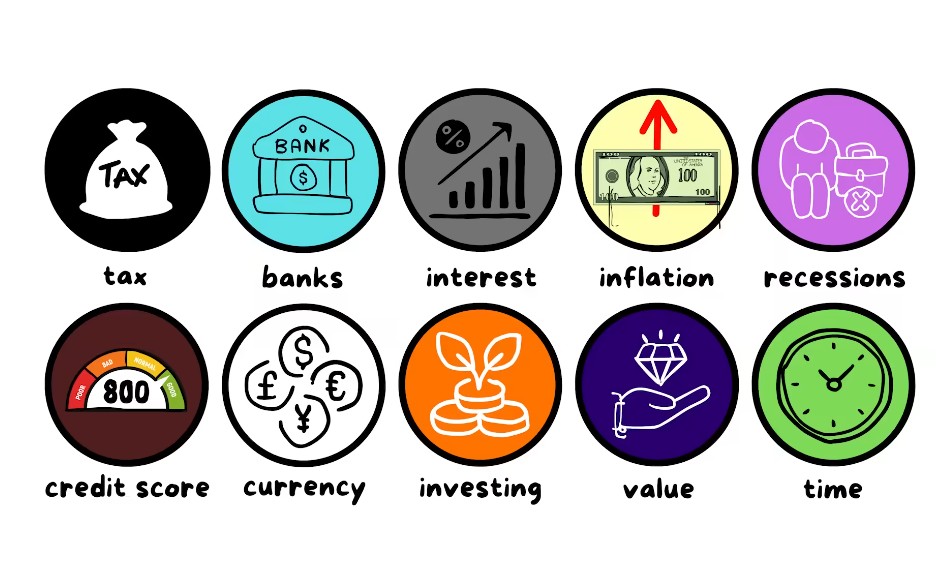

Introduction: Understanding Basic Financial Concepts for Better Money Management
Learning basic financial concepts is essentially the first step toward achieving financial freedom and security. Furthermore, these fundamental principles help you make smarter decisions with your money every single day. Generally speaking, basic financial concepts aren’t complicated mathematics but rather simple ideas that guide your financial choices. Moreover, understanding these essential principles empowers you to build wealth, avoid debt, and plan for a comfortable future.
Additionally, basic financial concepts affect everyone regardless of age, income, or background. Subsequently, mastering these ideas early in life creates opportunities for long-term financial success. Therefore, this guide will explain the most important basic financial concepts in simple terms that anyone can understand and apply immediately.
Core Basic Financial Concepts About Money
Income and Expenses: Foundation of Basic Financial Concepts
First and foremost, income represents all the money you receive from various sources. Generally, this includes your salary, business profits, investments, or side hustles. Furthermore, understanding different income types helps you identify opportunities to earn more money. Consequently, basic financial concepts teach us to focus on increasing income while managing expenses wisely.
Moreover, expenses are all the costs you pay for living and maintaining your lifestyle. Therefore, tracking expenses reveals where your money goes each month. Additionally, basic financial concepts divide expenses into two categories: needs and wants. Subsequently, needs include housing, food, and healthcare, while wants cover entertainment and luxury items.
Meanwhile, the gap between income and expenses determines your financial health. Furthermore, when income exceeds expenses, you create savings for future goals. However, when expenses exceed income, debt accumulates and financial stress increases.
Budgeting: Essential Among Basic Financial Concepts
Subsequently, budgeting stands as one of the most practical basic financial concepts for everyone. Initially, a budget simply plans how you’ll spend money before actually spending it. Furthermore, creating a budget helps you control spending and achieve financial goals faster.
Moreover, the 50/30/20 rule offers a simple budgeting framework within basic financial concepts. Therefore, allocate 50% of income to needs, 30% to wants, and 20% to savings. Additionally, this guideline provides structure while maintaining flexibility for personal preferences.
Saving and Interest: Crucial Basic Financial Concepts
Building Emergency Funds Through Basic Financial Concepts
Generally speaking, emergency funds protect you from unexpected financial problems. Furthermore, basic financial concepts recommend saving three to six months of expenses for emergencies. Therefore, this safety net prevents you from using credit cards during difficult times.
Additionally, start building your emergency fund with small, regular contributions. Subsequently, even saving $25 weekly adds up to $1,300 annually. Meanwhile, keep emergency funds in accessible savings accounts rather than investments. Furthermore, treat emergency savings as a non-negotiable monthly expense.
Understanding Compound Interest in Basic Financial Concepts
Moreover, compound interest represents one of the most powerful basic financial concepts for wealth building. Initially, you earn interest on your original savings amount. Furthermore, you then earn interest on both the original amount and previous interest earned. Therefore, your money grows exponentially over time through compounding.
Subsequently, starting early maximizes compound interest benefits within basic financial concepts. Additionally, even small amounts invested young grow substantially by retirement. Meanwhile, the Rule of 72 helps estimate investment doubling time quickly. Furthermore, divide 72 by your interest rate to find years needed to double money.
Investment Basic Financial Concepts
Risk and Return in Basic Financial Concepts
Generally speaking, investments with higher potential returns carry greater risk. Furthermore, understanding this relationship helps you make appropriate investment choices. Therefore, basic financial concepts teach balancing risk with your personal comfort level and timeline.
Moreover, diversification reduces risk by spreading investments across different assets. Subsequently, owning various stocks, bonds, and funds protects against major losses. Additionally, never put all your money in one investment, regardless of potential returns.
Starting Your Investment Journey with Basic Financial Concepts
Furthermore, index funds offer beginners an easy entry into investing. Generally, these funds track market indexes and provide instant diversification. Therefore, you own small portions of hundreds or thousands of companies automatically. Moreover, low fees make index funds attractive within basic financial concepts for long-term growth.
Additionally, dollar-cost averaging simplifies investing by purchasing regularly regardless of market conditions. Subsequently, you buy more shares when prices drop and fewer when prices rise. Meanwhile, this approach removes emotion from investing and builds discipline over time.
Debt Management Within Basic Financial Concepts
Good Debt Versus Bad Debt
Initially, not all debt hurts your finances according to basic financial concepts. Generally speaking, good debt helps acquire appreciating assets or increases earning potential. Furthermore, mortgages and student loans often represent good debt when used wisely.
Moreover, bad debt finances depreciating items or unnecessary purchases. Therefore, high-interest credit card debt typically represents bad debt. Additionally, car loans can be bad debt if you buy beyond your means. Subsequently, basic financial concepts emphasize minimizing bad debt while using good debt strategically.
Paying Off Debt Using Basic Financial Concepts
Furthermore, two popular strategies exist within basic financial concepts for debt elimination. Initially, the avalanche method pays highest-interest debt first, saving money mathematically. Meanwhile, the snowball method pays smallest debts first, providing psychological victories.
Additionally, making extra payments toward principal reduces interest costs significantly. Therefore, even small additional amounts accelerate debt payoff substantially. Moreover, basic financial concepts suggest using windfalls like tax refunds for debt reduction.
Credit Scores and Basic Financial Concepts
Understanding Your Credit Score
Generally speaking, credit scores measure your creditworthiness based on payment history. Furthermore, basic financial concepts identify five factors determining your score. Therefore, payment history (35%) and credit utilization (30%) matter most.
Moreover, maintaining good credit saves thousands on loans and insurance. Subsequently, check your credit report annually for errors and fraud. Additionally, dispute any inaccuracies immediately to protect your score.
Building Credit with Basic Financial Concepts
Furthermore, establishing credit early helps your financial future significantly. Initially, secured credit cards help beginners build credit history safely. Therefore, use credit cards responsibly and pay balances fully monthly.
Additionally, keep credit utilization below 30% of available limits. Meanwhile, basic financial concepts warn against closing old accounts, which shortens credit history. Moreover, avoid applying for multiple credit accounts simultaneously.
Insurance Protection in Basic Financial Concepts
Essential Insurance Types
Generally speaking, insurance protects against financial disasters. Furthermore, basic financial concepts identify health, auto, and home insurance as essential coverage. Therefore, adequate insurance prevents medical bills or accidents from destroying finances.
Moreover, life insurance becomes important when others depend on your income. Subsequently, term life insurance provides affordable coverage during working years. Additionally, disability insurance replaces income if injury prevents working.
Understanding Insurance Costs
Furthermore, deductibles affect your premium costs and claim payments. Generally, higher deductibles mean lower premiums but more out-of-pocket costs. Therefore, basic financial concepts suggest balancing deductibles with emergency fund availability.
Additionally, shopping for insurance regularly ensures competitive pricing. Meanwhile, bundling policies often provides significant discounts. Moreover, good credit scores can reduce insurance premiums substantially.
Retirement Planning Through Basic Financial Concepts
Starting Early with Retirement
Initially, time represents your greatest retirement asset. Furthermore, basic financial concepts demonstrate that starting early dramatically increases retirement wealth. Therefore, even small contributions in your twenties grow substantially through compounding.
Moreover, employer 401(k) matches provide free money toward retirement. Subsequently, contribute enough to receive full matching benefits. Additionally, increase contributions gradually as income grows over time.
Retirement Account Types in Basic Financial Concepts
Furthermore, traditional retirement accounts provide immediate tax deductions. Generally, you pay taxes when withdrawing money during retirement. Meanwhile, Roth accounts use after-tax money but provide tax-free withdrawals.
Additionally, IRAs offer retirement savings beyond employer plans. Therefore, basic financial concepts suggest maximizing all available retirement account types. Moreover, catch-up contributions allow older workers to save extra amounts annually.
Tax Planning Within Basic Financial Concepts
Understanding Tax Brackets
Generally speaking, tax brackets determine how much you owe based on income. Furthermore, moving to higher brackets doesn’t reduce overall take-home pay. Therefore, only income above bracket thresholds gets taxed at higher rates.
Moreover, deductions and credits reduce your tax burden significantly. Subsequently, standard deductions simplify filing for most taxpayers. Additionally, basic financial concepts emphasize tracking deductible expenses throughout the year.
Tax-Advantaged Strategies
Furthermore, retirement contributions reduce current taxable income. Generally, Health Savings Accounts provide triple tax benefits for medical expenses. Therefore, understanding these accounts within basic financial concepts saves money annually.
Additionally, tax-loss harvesting offsets investment gains with losses. Meanwhile, holding investments over one year qualifies for lower capital gains rates. Moreover, timing income and deductions strategically can reduce taxes substantially.
Real Estate and Basic Financial Concepts
Homeownership Considerations
Initially, buying versus renting involves multiple factors beyond monthly payments. Furthermore, basic financial concepts consider maintenance costs, property taxes, and opportunity costs. Therefore, calculate total ownership costs before purchasing property.
Moreover, down payments affect mortgage terms and monthly payments significantly. Subsequently, 20% down payments avoid private mortgage insurance requirements. Additionally, larger down payments reduce total interest paid over time.
Real Estate Investment Basics
Furthermore, rental properties can generate passive income streams. Generally, positive cash flow requires careful property selection and management. Therefore, basic financial concepts emphasize researching markets thoroughly before investing.
Additionally, REITs provide real estate exposure without direct ownership. Meanwhile, these investments offer liquidity and professional management. Moreover, REIT dividends provide regular income for investors.
Conclusion
In conclusion, mastering basic financial concepts creates the foundation for lifelong financial success. Furthermore, these principles guide smart money decisions and help achieve financial goals faster. Generally speaking, anyone can learn and apply these concepts regardless of current financial situation.
Moreover, basic financial concepts work together to improve overall financial health. Subsequently, combining budgeting, saving, investing, and debt management multiplies your progress. Therefore, start implementing these concepts gradually until they become natural habits.
Additionally, remember that personal finance is indeed personal. Meanwhile, adapt these basic financial concepts to fit your unique circumstances and goals. Furthermore, continuous learning and adjustment ensure long-term financial success.
Ultimately, understanding basic financial concepts empowers you to control your financial future confidently. Therefore, invest time in financial education today for a prosperous tomorrow.
For more financial insights and resources, visit Digital New IT and explore additional information at K-Rep Bank.